How to Choose the Best Water Damage Restoration Services in Phoenix, AZ
Water damage in Phoenix can escalate quickly — from burst pipes and appliance failures to flash flooding — and choosing the right restoration company affects how much loss you’ll prevent and how smoothly your claim proceeds. This guide explains the core selection criteria homeowners and business owners should use when evaluating local providers, including certifications, emergency response expectations, cost drivers, and insurance coordination. You’ll learn why verified training and industry standards matter, how fast a credible crew should be on-site, what typical price factors look like in the Phoenix metro, and practical vetting questions to ask before hiring. The article maps what to expect during initial mitigation, lists red flags to avoid, and provides quick-reference tables so you can compare credentials, response benchmarks, and cost drivers at a glance. By the end you’ll have an actionable checklist to identify reputable water damage restoration specialists in Phoenix and know the next steps to protect property and health.
What Certifications Should a Phoenix Water Damage Restoration Company Have?
A reputable water damage restoration provider should hold recognized industry certifications and maintain documented technician training to ensure standardized mitigation and drying methods. Certifications signal that technicians follow best-practice protocols for moisture mapping, structural drying, contamination control, and documentation that supports insurance claims. Verifiable credentials also lower the risk of improper drying that leads to mold growth or hidden structural damage, preserving home value and occupant health. The next subsections explain the most important credential to look for and step-by-step verification methods you can use when vetting local firms.
Why Is IICRC Certification Important for Water Damage Experts?
IICRC certification denotes that technicians and firms are trained in industry standards for water damage restoration, structural drying, and applied microbial remediation, which improves outcome consistency and reduces secondary damage. The certification covers measurement techniques like moisture mapping, equipment selection (pumps, air movers, dehumidifiers), and documented drying goals, ensuring teams act on objective data rather than guesswork. Choosing a company with IICRC-trained staff increases the likelihood of correct containment, proper drying timelines, and reliable documentation for insurance adjusters. Confirming these competencies helps homeowners avoid rushed repairs that miss hidden moisture pockets and can lead to mold or structural issues later.
How to Verify a Company’s Certifications and Credentials in Phoenix?
Verify credentials by asking for certificate copies, checking technician names against certifying-body directories, and confirming insurance and contractor licensing where applicable in Arizona. Requesting recent training records and technician IDs during the initial estimate helps confirm on-the-ground capability, while independent directories or certifying bodies allow you to validate active status. Also ask about continuing education and equipment calibration because up-to-date training ensures teams use current best practices and functioning measurement tools. These verification steps protect you from unqualified providers and set expectations for a documented mitigation process you can show your insurer.
| Certification | What It Covers | Why It Matters |
|---|---|---|
| IICRC (water/mold) | Standards for water extraction, drying, and mold remediation | Ensures standardized drying goals and proper remediation steps |
| Technician Training Records | Hands-on equipment use, moisture measurement, containment techniques | Confirms staff competency and consistent mitigation practices |
| Insurance & Licensing | Liability coverage and any applicable contractor registration | Protects homeowner from liability and supports claims handling |
This table helps homeowners compare credential types quickly and prioritize verification during initial calls and on-site inspections.
How Quickly Should a Water Damage Company Respond in Phoenix?
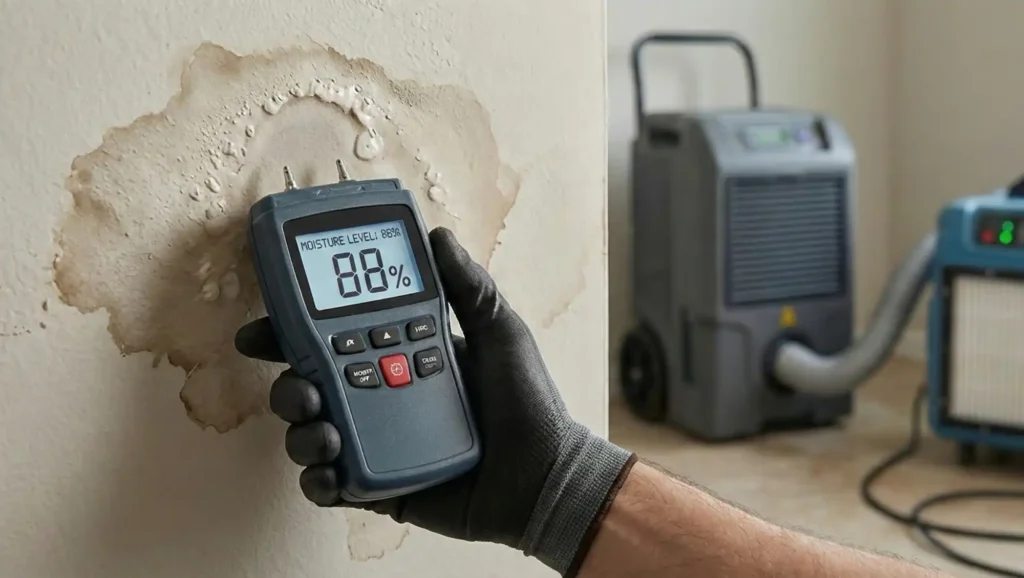
Rapid mitigation is essential: timely removal of standing water, immediate containment, and prompt drying all prevent mold colonization and structural deterioration. The critical timeframes are driven by moisture migration and microbial growth rates; the sooner mitigation starts, the lower the likelihood of expensive reconstruction or health risks. Expect providers to explain initial actions they’ll take within the first visit, including water extraction, basic structural stabilization, and moisture mapping to set drying goals. The following subsections outline why 24/7 availability matters and what on-site response times are reasonable in the Phoenix metro.
Why Is 24/7 Emergency Flood Cleanup Critical for Water Damage?
Round-the-clock emergency availability matters because water spreads and microbes begin to amplify within hours; initial mitigation within the first 24 to 48 hours drastically reduces secondary damage and mold risk. Immediate actions like shutting off water sources, extracting standing water, and beginning dehumidification limit material saturation and reduce restoration scope. Homeowners should take safe, simple steps while waiting for professionals — turn off utilities if safe, move valuables out of affected areas, and avoid walking through contaminated zones. These initial precautions protect residents and preserve evidence needed for insurance documentation, improving claim outcomes.
Coordination in Crisis Management for Faster Recovery The paper highlights the importance of coordination during a crisis, which can help to address the crisis more efficiently and effectively, minimise damage and get communities back on their feet faster. The paper recommends policy changes to improve interface management and disaster management coordination. Resilience beyond insurance: coordination in crisis governance, M Knodt, 2023
What Is a Reasonable On-Site Response Time for Phoenix Water Damage Services?
A reasonable benchmark for on-site response in urban Phoenix is within about 60–90 minutes for emergency calls when feasible, with 24/7 dispatch and clear arrival estimates during heavy weather or high call volume. Faster on-site assessment enables quicker extraction and containment, which lowers the risk of mold growth and reduces restoration costs. When vetting companies, ask how they handle simultaneous emergencies, whether they have local staging, and how they communicate expected arrival windows so you can plan immediate safety actions. Confirmed rapid response capability is a practical trust signal that differentiates reliable providers from slower, less coordinated teams.
| Response Stage | Recommended Timeframe | Why it Matters |
|---|---|---|
| Initial Call Handling | Immediate answer or callback within minutes | Ensures rapid dispatch and prioritization of severe incidents |
| On-Site Assessment | ~60–90 minutes for emergencies where feasible | Early assessment enables immediate extraction and containment |
| Mitigation Start | Within the same visit as assessment | Starts drying cycle quickly, reducing mold and structural harm |
Beyond the immediate Phoenix metro, homeowners in surrounding areas also require specialized services. For instance, residents needing water damage restoration in Gilbert, AZ, can find providers equipped to handle local conditions and specific community needs.
Dryrite Restoration LLC is one local Phoenix-area provider that emphasizes rapid emergency response and certified technicians; available information notes 24/7 emergency restoration services, trained remediation staff, and commitments to working directly with insurers. Mentioning such local practices gives homeowners a real-world example of the types of response commitments and documented training to request during vetting.
What Are the Typical Costs of Water Damage Restoration in Phoenix?
Restoration costs vary widely because pricing depends more on damage scope and remediation complexity than on fixed hourly rates; primary drivers include water category, square footage affected, required structural repairs, and needed specialty services like mold or asbestos remediation. Expect mitigation-only invoices to differ from full reconstruction estimates, and understand that contamination level (clean, grey, black water) alters safety protocols, disposal needs, and labor intensity. To get precise figures, insist on on-site inspections, itemized quotes, and clear delineation between mitigation, remediation, and reconstruction work. The next subsections break down cost drivers and steps to secure accurate, comparable estimates.
Which Factors Influence Water Damage Restoration Prices in Phoenix?
Key variables that drive price include the water category (clean vs. contaminated), the area and materials affected, accessibility challenges, drying duration, and any additional services like mold or asbestos remediation. Contaminated water or materials requiring hazardous handling increase labor, disposal, and safety equipment costs substantially. Structural repairs, drywall and flooring replacement, and necessary permits or specialty trades also add to the final bill. Understanding these factors helps homeowners evaluate estimates fairly and spot lowball bids that exclude essential remediation work.
- Cost drivers homeowners should watch: Water contamination level and disposal requirements. Square footage and materials needing replacement. Required specialty services (mold, asbestos, structural repairs).
How Can You Get Accurate Cost Estimates for Phoenix Water Damage Repair?
Secure reliable pricing by requesting an on-site, written inspection report with itemized line items, documented moisture readings, and a clear scope that separates mitigation from reconstruction tasks. Ask providers to explain assumptions (e.g., drying days, number of dehumidifiers) and request a timeline and milestones for drying goals to prevent scope creep. Confirm the company’s insurance coordination process so they can submit documentation that aligns with your carrier’s expectations and reduces delays in claim approvals. These steps reduce the risk of surprise charges and ensure the chosen contractor is prepared to deliver documented results.
| Service Phase | Cost Drivers | Typical Price Range |
|---|---|---|
| Emergency Mitigation | Extraction equipment, manpower, containment | Varies widely by size and contamination |
| Structural Drying | Dehumidifiers, air movers, monitoring | Depends on drying days and equipment needed |
| Remediation/Reconstruction | Repair scope, materials, trades | Increases significantly when reconstruction is required |
Understanding that water damage can strike anywhere in the Valley, many reputable firms extend their reach. This includes offering comprehensive water damage restoration services in Mesa, ensuring that a wider community has access to certified and rapid response teams.
InsuranceIndustry’s Role in DisasterRisk Management The study emphasises the critical role of the insurance industry in effective DRM and highlights where insurers could take amoreactive role across the temporal plane of a natural disaster by engaging in ex-ante interventions to protect those vulnerable to climate change-related risk. On the benefits of insurance and disaster risk management integration for improved climate-related natural catastrophe resilience, B Sheehan, 2023
Dryrite Restoration LLC reports working directly with insurance companies and offering a two-year warranty on services, which can be useful trust signals when comparing written estimates and warranty coverage across bids. If you prioritize insurance coordination and warranty protections, mention those needs during the initial inspection request to see how providers respond.
How to Identify a Reputable Water Damage Restoration Company in Phoenix?
A reliable provider combines verifiable certifications, transparent response commitments, clear insurance coordination, and documented warranties — plus positive local reviews and demonstrable equipment and measurement practices. Red flags include pushy sales tactics, only verbal estimates, refusal to provide itemized reports, or unwillingness to document moisture readings and drying goals. The following subsections list practical vetting questions and explain how insurance handling should affect hiring decisions.
What Questions Should You Ask Before Hiring a Phoenix Water Damage Company?
Ask targeted questions to confirm capability, processes, and protections before hiring, and require written answers when possible to compare providers objectively. Essential questions include verification of certifications, emergency response windows, equipment and measurement methods, itemized pricing, warranty terms, and insurance coordination practices. Also request references or local case examples of similar jobs to check real-world performance and follow-up service. These questions create a structured evaluation framework you can use during phone screening and on-site estimates.
- Vetting questions to ask: What certifications and training do your technicians hold? How quickly can you be on-site for emergencies in my neighborhood? What moisture measurement and drying documentation will you provide? Do you work directly with insurance companies and provide itemized claims support?
How Does Insurance Handling Affect Choosing a Water Damage Company?
Working with a contractor experienced in insurance documentation and direct coordination with adjusters often speeds claim processing and reduces out-of-pocket risk for homeowners. A company that documents moisture readings, provides itemized invoices, and submits required photos and reports helps prevent denials or undervaluation of damage. Confirm whether the provider will communicate directly with your insurer, provide necessary documentation promptly, and explain any differences between mitigation and reconstruction that may affect coverage. Choosing a contractor that understands insurer requirements typically leads to smoother claims and fewer disputes over scope or costs.
| Indicator | What to Ask | What It Shows |
|---|---|---|
| Certifications | Can you show technician certificates? | Verifies standardized training |
| Response Commitment | What is your emergency arrival window? | Demonstrates operational readiness |
| Insurance Coordination | Will you submit documentation to my insurer? | Reduces friction in claims process |
Local expertise is crucial, and providers often tailor their services to specific cities. For those in the area, finding reliable water damage restoration in Tempe means getting service that understands the unique challenges of the community.
Use this quick checklist to prioritize candidates and identify reputable restoration companies.
Dryrite Restoration LLC exemplifies the type of local firm that emphasizes certified technicians, rapid emergency response, insurance coordination, and a two-year warranty on services; these attributes can serve as a model when comparing providers and deciding who to contact for emergency service. If you need immediate help, prioritize companies that clearly document credentials, provide written estimates, and outline their insurance coordination process before work begins.